Perth Sand: The Cheapest Garage Door Fault There Is
Perth is built on the Swan Coastal Plain — deep sand over limestone — and that fact reaches your garage door whether you live in Scarborough or Southern River. Add mature street trees in the established suburbs and jarrah and marri litter up on the scarp, and you get the most common and most misdiagnosed garage door fault in this city.
It presents as a door that reverses partway through closing, or grinds, or refuses to close at all. It reads to almost everyone as a failing motor or a dead sensor. It is very often neither.
Why the motor reverses
Modern openers are deliberately suspicious. They monitor the force required to move the door, and when that force spikes beyond a set threshold they assume the door has hit something and reverse. That is the auto-reverse safety function, and it is the feature standing between your door and a child, a bonnet or a pet.
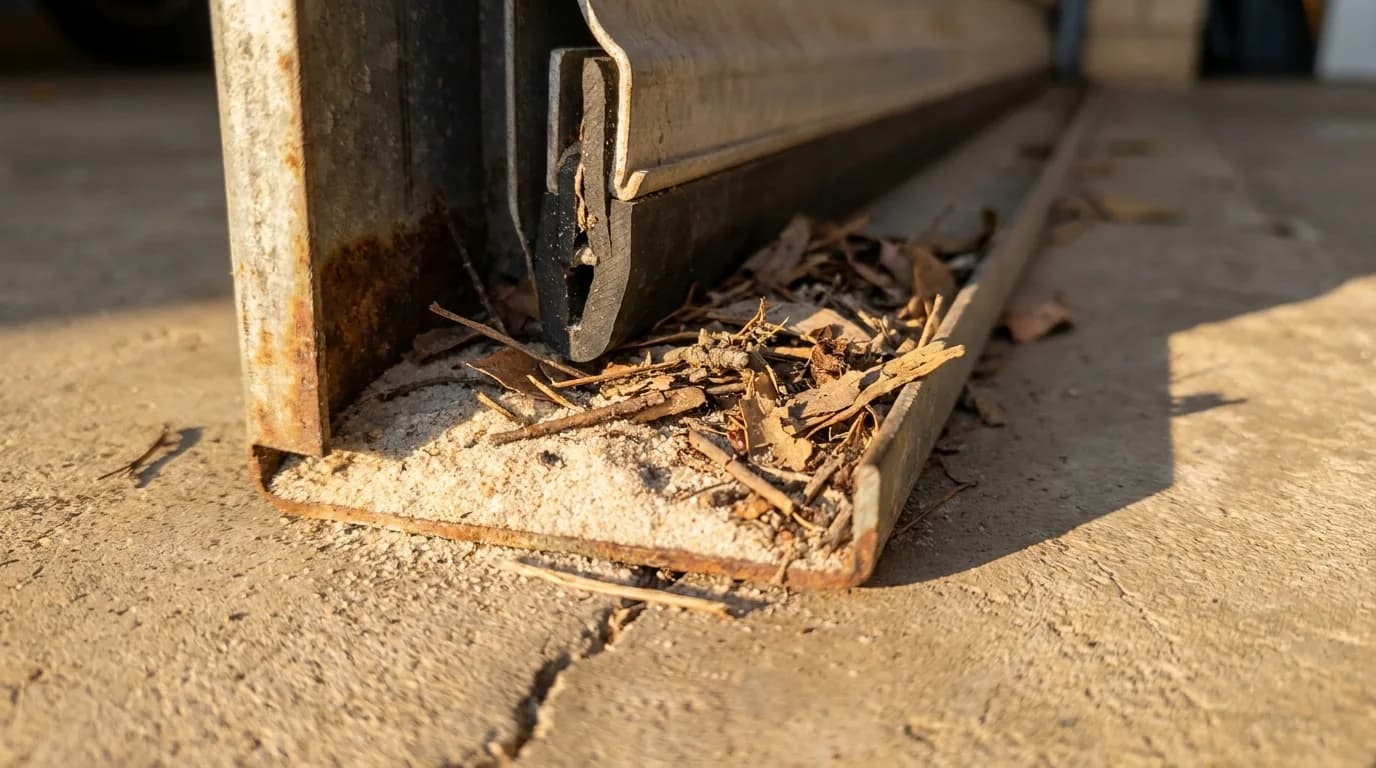
The motor cannot tell the difference between an obstruction and drag. Sand packed in a roller door's side guides, or grit and litter in a sectional door's lower tracks, adds resistance on every cycle. Enough of it and the force required crosses the threshold — so the door reverses, and the safety system is working exactly as designed. The door genuinely is fighting something. It is just not something you can see from the driveway.
What it does when it is not stopping the door
Long before it trips the motor, contamination in the guides is doing quieter damage. Sand is abrasive. Every cycle drags the curtain edge or the rollers through it, and the wear compounds — a roller develops a flat spot, a guide gets polished then scored, a curtain edge thins. That is why so many Perth doors go noisy and rough years before they go faulty, and why owners assume noise is just what an older door does.
Usually it is not. Clearing and correctly re-lubricating the tracks and guides on a contaminated door often returns it to something close to how it ran when it was new, which is a considerably better outcome than the replacement people are frequently bracing for.
Where it comes from, by suburb type
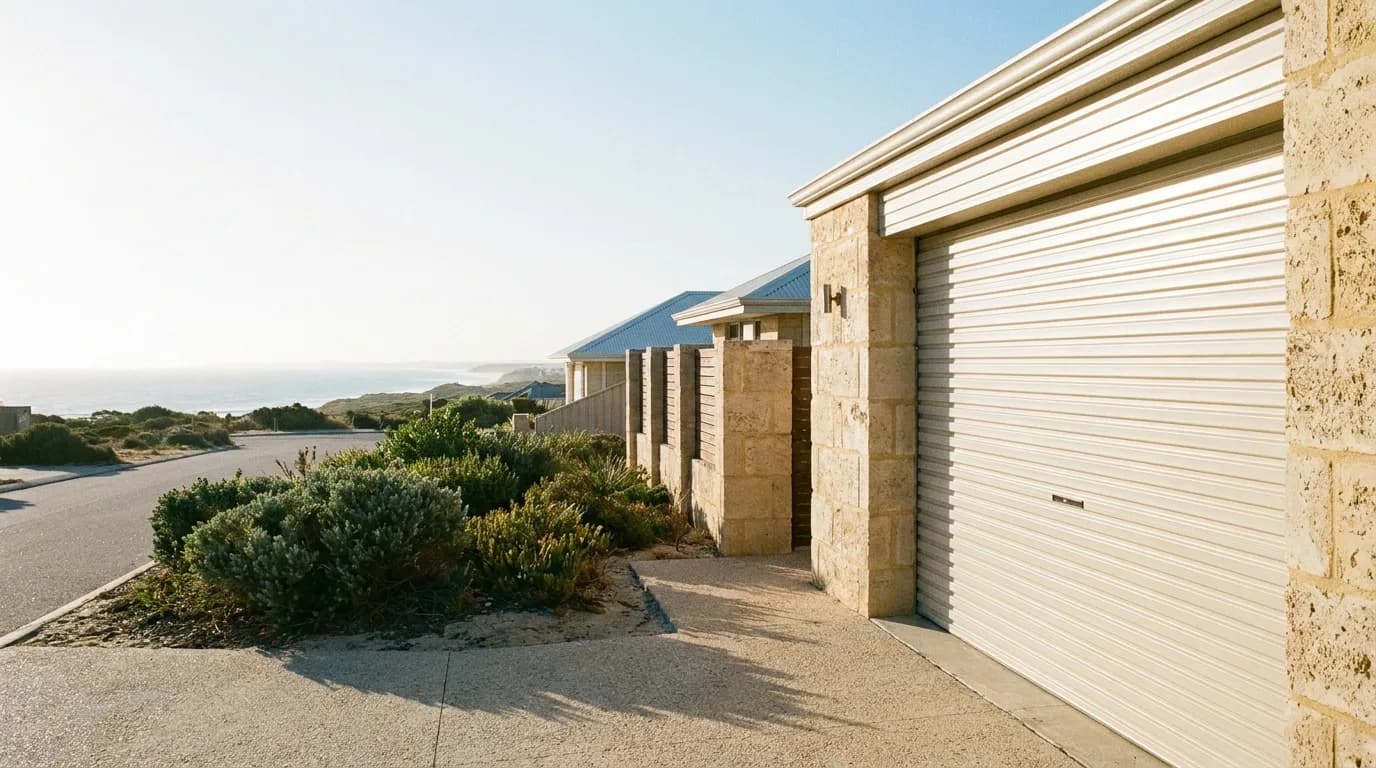
- Coastal suburbs get wind-blown sand off the dune line, carried in on the sea breeze that arrives most summer afternoons. It is fine, it is constant, and it goes everywhere.
- Leafy established suburbs get seed pods, bark and leaf litter from mature street trees, which collects in the bottom channel and holds moisture against the door.
- The Perth Hills get continuous jarrah and marri drop, at a volume that genuinely surprises people who have moved up from the plain.
- New estates get construction dust and unstabilised sand from lots still being built on around them — which is why brand-new doors in growth suburbs are not exempt from this.
- Industrial and trade estates get grit from vehicle traffic, which behaves like sand but is harder and does more damage per particle.
What you can safely do yourself
All of this is owner-serviceable, needs no tools beyond a brush, and touches nothing under tension.
- Brush or vacuum out the bottom channel across the full width of the opening, and both side guides as far up as you can comfortably reach.
- Check the bottom seal for grit trapped underneath it and for perishing or curling — a curled seal catches on a lifted slab edge and produces the same reversing symptom.
- Wipe the safety sensor lenses either side of the opening with a soft dry cloth. In Perth, spider webs across a lens are a genuinely common cause of a door that will not close.
- Look along both tracks for bright rub marks on the metal. That is where the door has been fighting something, and it maps the fault for you.
- Do not spray general-purpose lubricant into a dirty track. It turns fine sand into grinding paste and makes the problem worse. Clear first; lubricate the right components afterwards, or leave that to a service.
When it is not the tracks
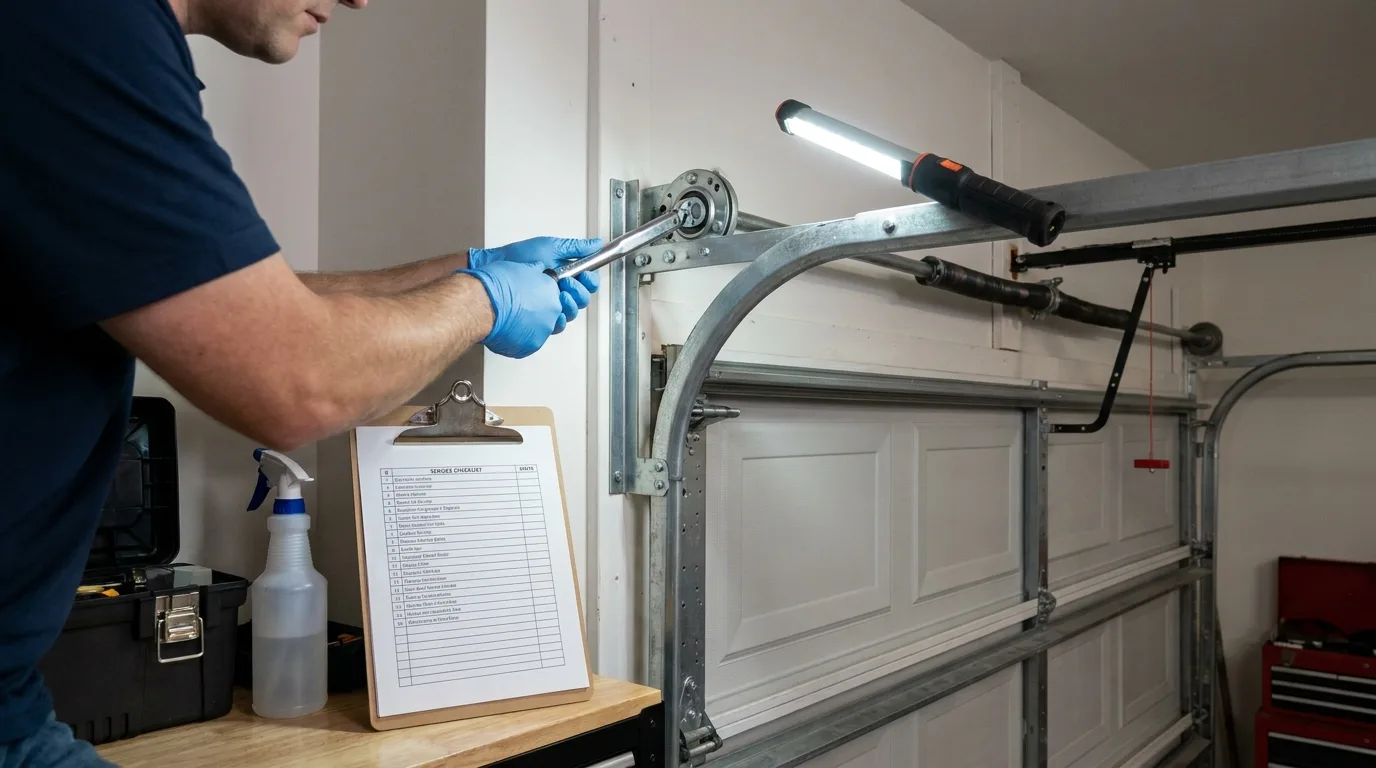
If you have cleared everything and the door still reverses at the same point every time, the likely candidates shift: a travel limit that has drifted so the door reaches the slab before the motor thinks it should, a safety beam knocked out of alignment in its bracket, or a roller with a seized bearing adding drag that no amount of cleaning will fix. Those are diagnosis rather than housekeeping, and they are ordinary garage door repair work.
One thing to avoid entirely: do not raise the motor's force setting to stop the door reversing. It is the advice most often found online and it is genuinely dangerous — you have not fixed a door, you have raised the weight the motor is permitted to bring down on whatever is underneath it, and removed the protection that reversing represented. If a door needs more force than it used to, something has got harder to move, and that something is the fault.
Keeping this under control between visits is also the cheapest maintenance there is, which is why it features in how often a Perth garage door should be serviced.