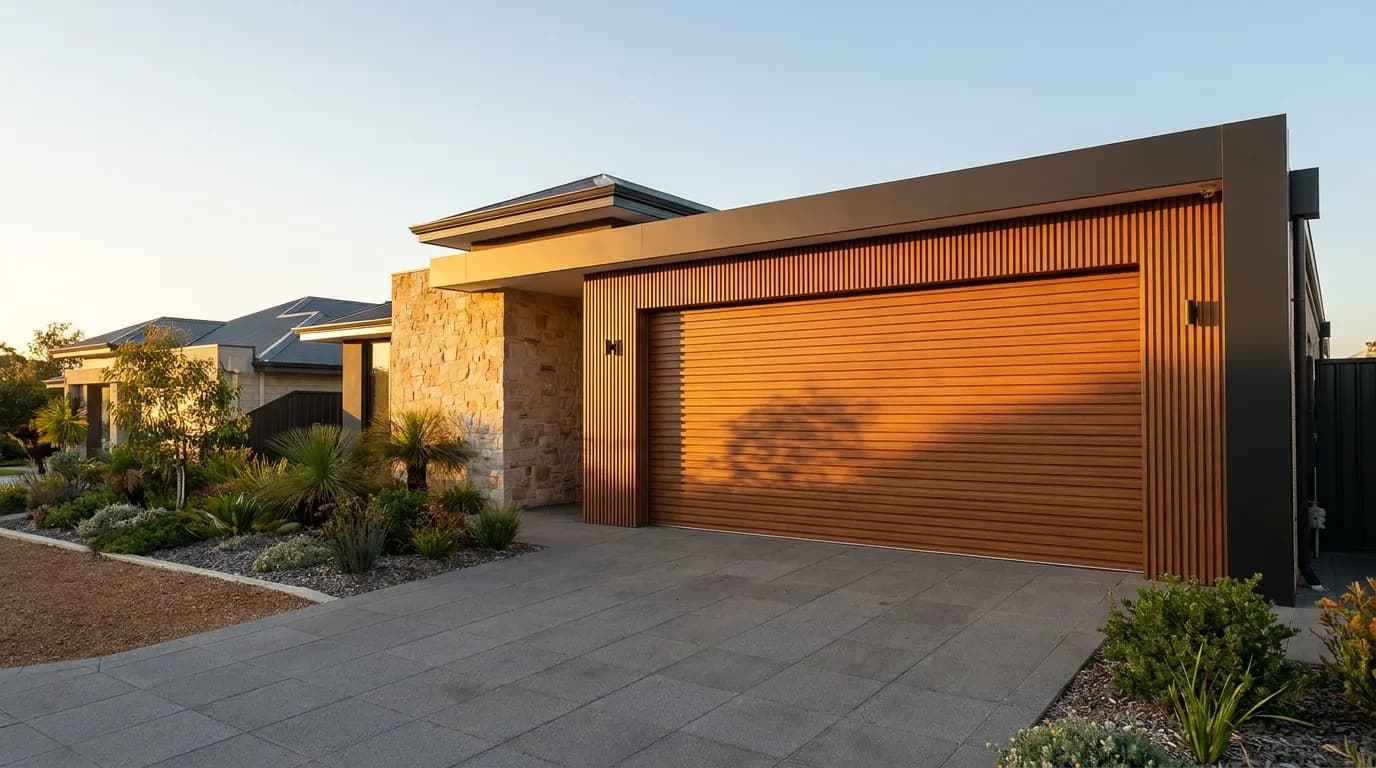
Real Cedar or Timber-Look? Choosing a Timber Garage Door in Perth
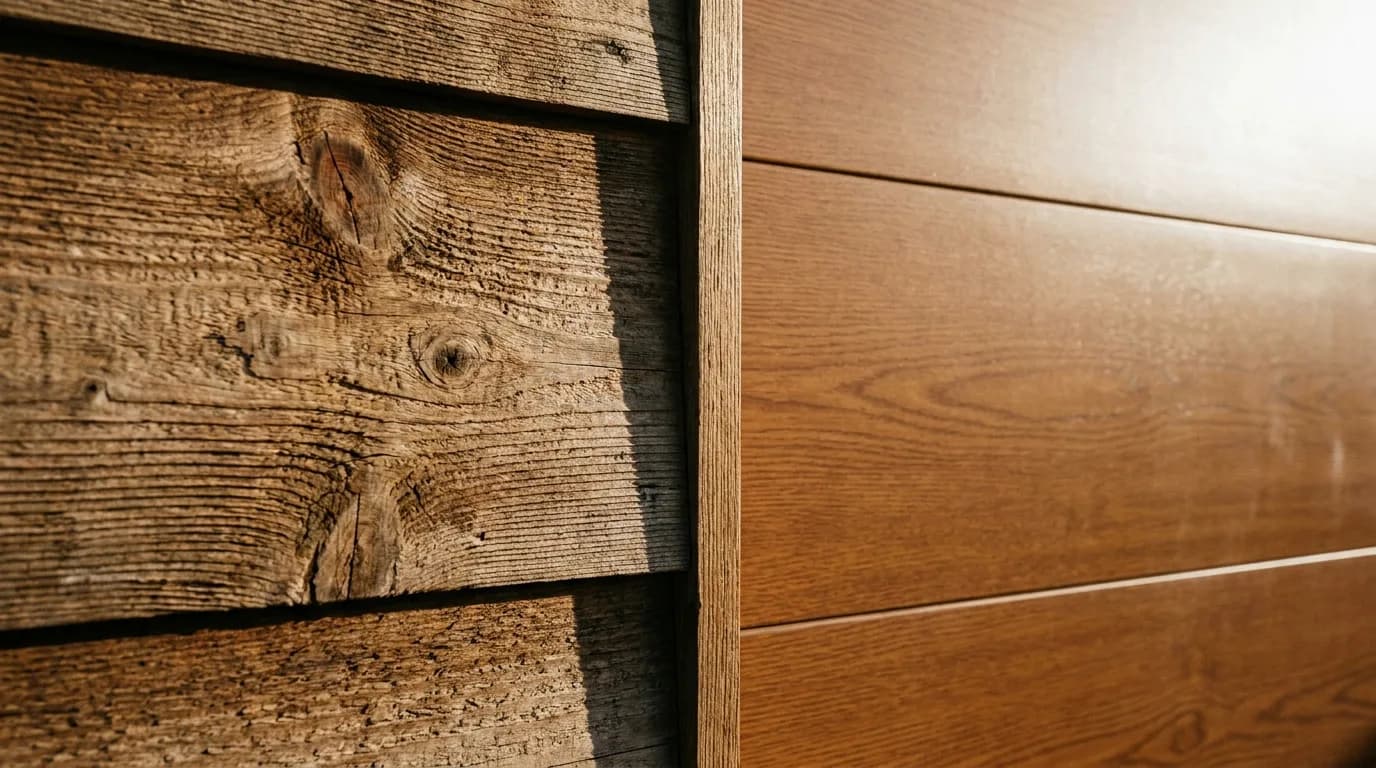
Stand across the road from a well-specified timber-look aluminium garage door and a real Western Red Cedar one and you will struggle to tell them apart. Stand in front of them and you can. Own them for ten years and the difference is not subtle at all.
Both are legitimate choices and we fit both across Perth's western suburbs, the riverside belt and the hills. What follows is the comparison we actually give people at the property, without a preference attached — because which one is right genuinely depends on the house, the aspect and how you feel about maintenance.
What real timber gives you, and what it asks
Cedar has depth. The grain is not printed on it, so it changes as the light moves across the day, and on a house where the door is a designed element that difference reads. It also takes a stain or an oil finish in a way a powder-coated panel cannot imitate, and it can be re-finished in a different tone years later if the house changes around it.
What it asks in return is a maintenance schedule rather than maintenance-on-demand. A cedar door needs its finish renewed on a cycle, and the cycle is set by exposure — a north or west-facing door taking full Perth afternoon sun works far harder than a sheltered south-facing one. Leaving it until the door looks tired is leaving it too late, because by then the timber has already been taking UV and moisture directly.
There is a mechanical consequence that almost nobody mentions at the point of sale. A timber door's weight genuinely changes over its life — it dries, it takes on moisture, and each re-coating adds material. That means the balance a technician set at installation is not permanently correct. On a timber door we recommend the balance be checked as part of a regular garage door service rather than assumed, because springs sized to the door as it was are not necessarily sized to the door as it is.
What timber-look gives you, and where it falls short
Timber-look aluminium and composite panels — the woodgrain powder-coat and printed-finish families widely used in Perth — deliver most of the appearance at a fraction of the upkeep. They do not need re-finishing, they do not move with humidity, and their weight is stable, so the door's balance stays where it was set.
They are also dimensionally stable across a wide span, which matters more than it sounds. On a five-metre door, a few millimetres of seasonal movement across the width shows up at the edges and at the guides. Aluminium simply does not do that.
Where they fall short is up close and over time. The finish is a surface rather than the material, so a deep scratch does not sand out the way it would on timber — it needs touching up or the panel replacing. And while modern woodgrain finishes are genuinely convincing, a discerning eye at conversational distance can usually still tell.
The coastal question changes the answer
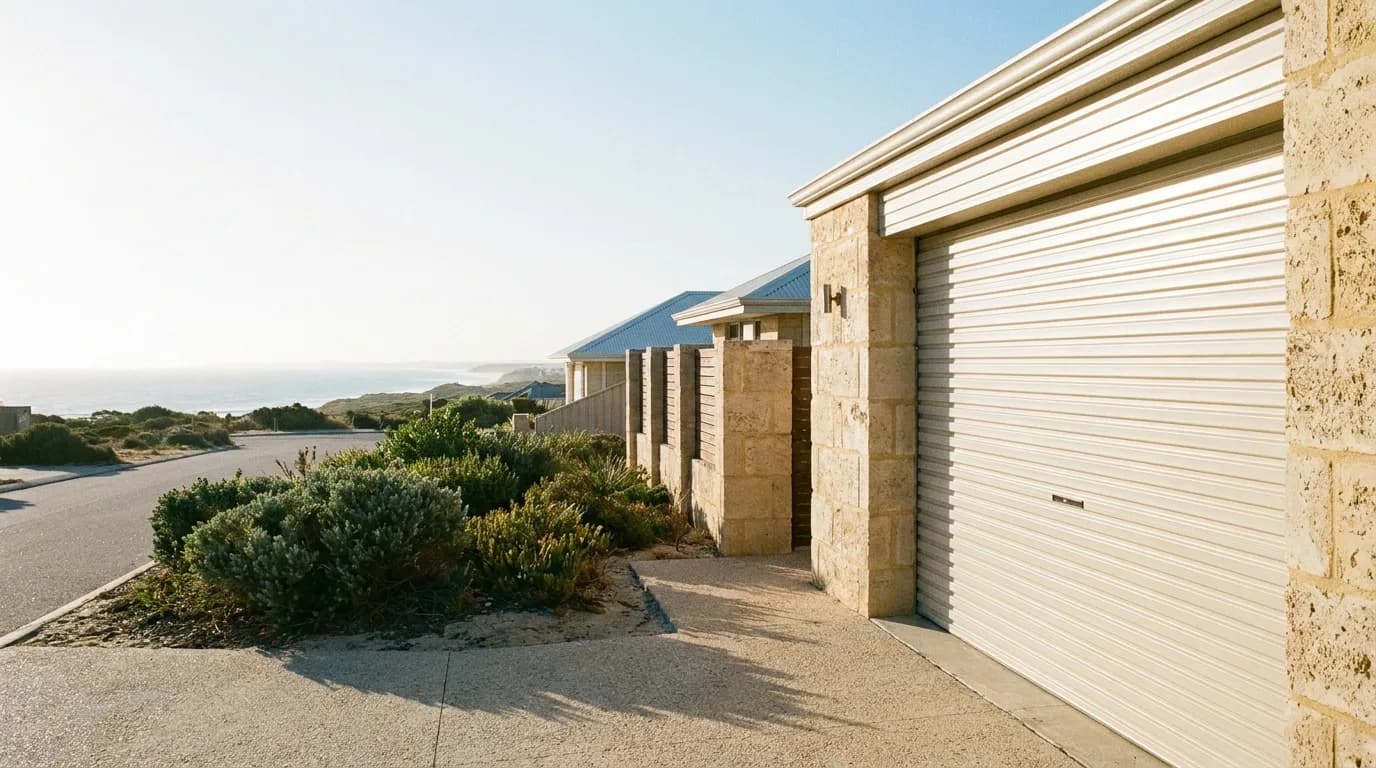
For anywhere in Perth's salt belt, this comparison matters less than people expect, because the thing that ends coastal doors is not the panel. It is the hardware: spring ends, fixings, track fasteners, the bottom rail. A cedar door and an aluminium door in Cottesloe will both outlive their standard-grade fixings by a wide margin.
So on a coastal address the real specification decision is coastal-grade hardware and a shorter service interval, not the panel material — and if you are choosing between the two on a beachfront frontage, the honest tiebreaker is that cedar's finish takes a harder beating from salt-laden wind than a powder-coated surface does. More on that in salt air and coastal garage doors.
The hills question points the other way
Up on the Darling Scarp — Kalamunda, Lesmurdie, Darlington, Glen Forrest, Mundaring — timber is a genuinely popular choice for a reason that has nothing to do with marketing. These are bush blocks, the houses are built to sit in them rather than against them, and a real timber door belongs in that setting in a way a powder-coated panel does not quite manage.
The trade-off up there is that the maintenance conversation gets more serious, not less: full sun on one face, bush litter, and a door that has to be re-finished on a schedule while also being heavy enough that balance genuinely matters. Both are manageable. Neither should be a surprise.
The short version
- If you want the material itself and are willing to keep a re-finishing schedule, real cedar is the better door and will look better for it.
- If you want the appearance without the schedule, timber-look aluminium or composite is not a compromise so much as a different product that happens to look similar.
- On a wide door, weight matters more than material — make sure the springs are sized to the finished door either way.
- On a coastal address, specify the hardware before you argue about the panel.
- On a timber door of any age, have the balance re-checked periodically rather than assuming it is still where it was set.
Whichever way you go, the mechanism has to be engineered to the finish. That is the recurring theme of our custom and designer door work, and it is covered in more depth in what actually decides the outcome on a custom garage door.