Custom Garage Doors in Perth: What Actually Decides the Outcome
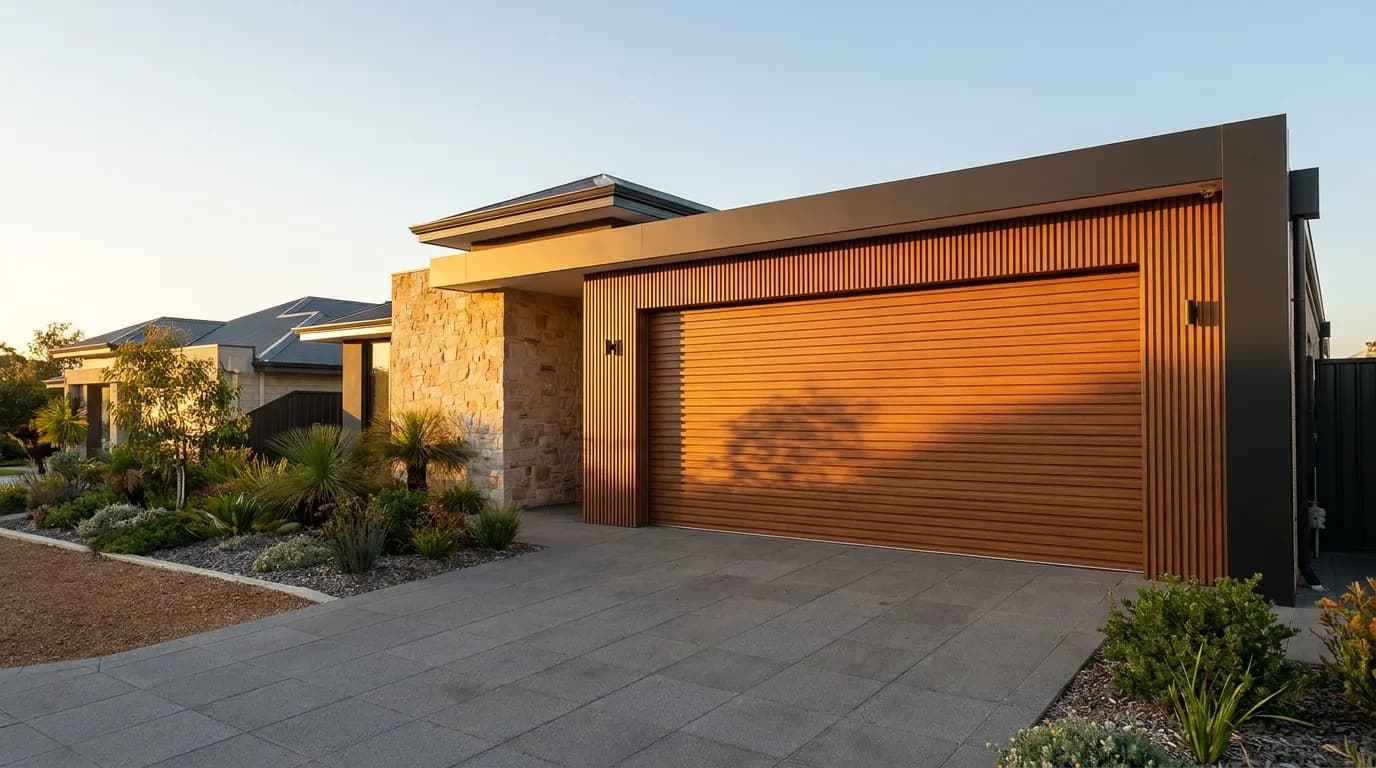
On most Perth frontages the garage door is the largest single visual element of the house — frequently wider than the front door, the windows and the entry path combined. In the western suburbs, along the Swan and the Canning, and through the coastal belt, it is increasingly chosen at the same time as the cladding and the window frames rather than picked from a catalogue afterwards. That is the right instinct. But the conversations we get called into a year or two later are almost never about the finish.
They are about a motor that has burnt out early, a door that has started running rough, or a panel that cannot be matched. All three trace back to decisions made before the door was ordered, and none of them are decisions about colour.
The opening decides more than the catalogue does
Every specification conversation should start with four measurements, and most start with a brochure instead. Headroom is the space between the top of the opening and the ceiling — it determines whether a sectional door's tracks can physically go in. Side room is the clearance either side of the opening for the vertical tracks. Backroom is how far into the garage the door needs to travel when open. And the condition of the jambs — the timber or steel the door will hang from — determines whether anything you fit will stay square.
On a purpose-built modern garage all four are usually generous. On a great deal of Perth's older housing they are not, because the garage was added years after the house or converted from a carport, and the opening was cut to suit a vehicle rather than a door mechanism. Restricted headroom in particular rules out door types before anyone has opened a swatch book — and it is why the roller door remains the correct answer on so many character-era Perth homes rather than a compromise.
Finished weight is the number that matters
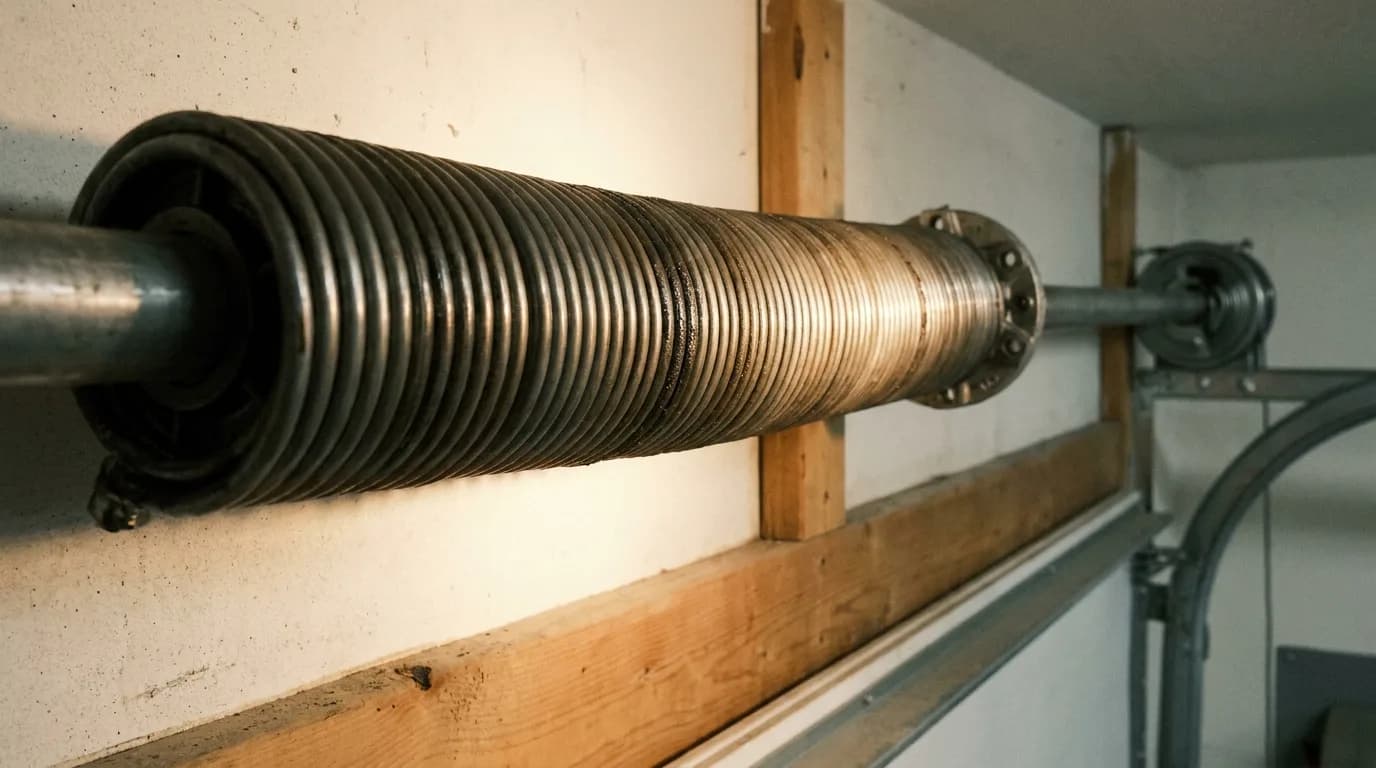
This is the single most consequential thing in this article. A garage door is counterbalanced by its springs, and those springs have to be sized to what the door actually weighs once it is finished — including cladding, battens, glazing, insulation and any applied finish. A standard double sectional door and a five-metre clad custom door are not the same machine, and sizing the second one from a chart written for the first is how expensive doors fail cheaply.
What happens when the springs are undersized is not dramatic, which is exactly why it goes unnoticed. The door still opens. The shortfall between what the springs carry and what the door weighs is simply absorbed by the motor, which then runs outside its design load on every single cycle. It does that quietly for a year or two and then fails — and the motor gets replaced, and the new motor inherits the same situation. When we are called to a premature opener failure on a wide custom door in Applecross or City Beach, the first thing we measure is not the motor. It is what the springs were sized against.
If you are specifying a custom door now, ask the supplier one question: what will the finished door weigh, and what spring configuration is being supplied for that weight? A supplier who can answer immediately has done the calculation. This is also the core of what our custom and designer garage door work involves — the engineering behind the finish rather than the finish alone.
Material: what each one actually asks of you
Perth's custom market runs on a handful of families, and the honest differences between them are about upkeep and weight rather than looks.
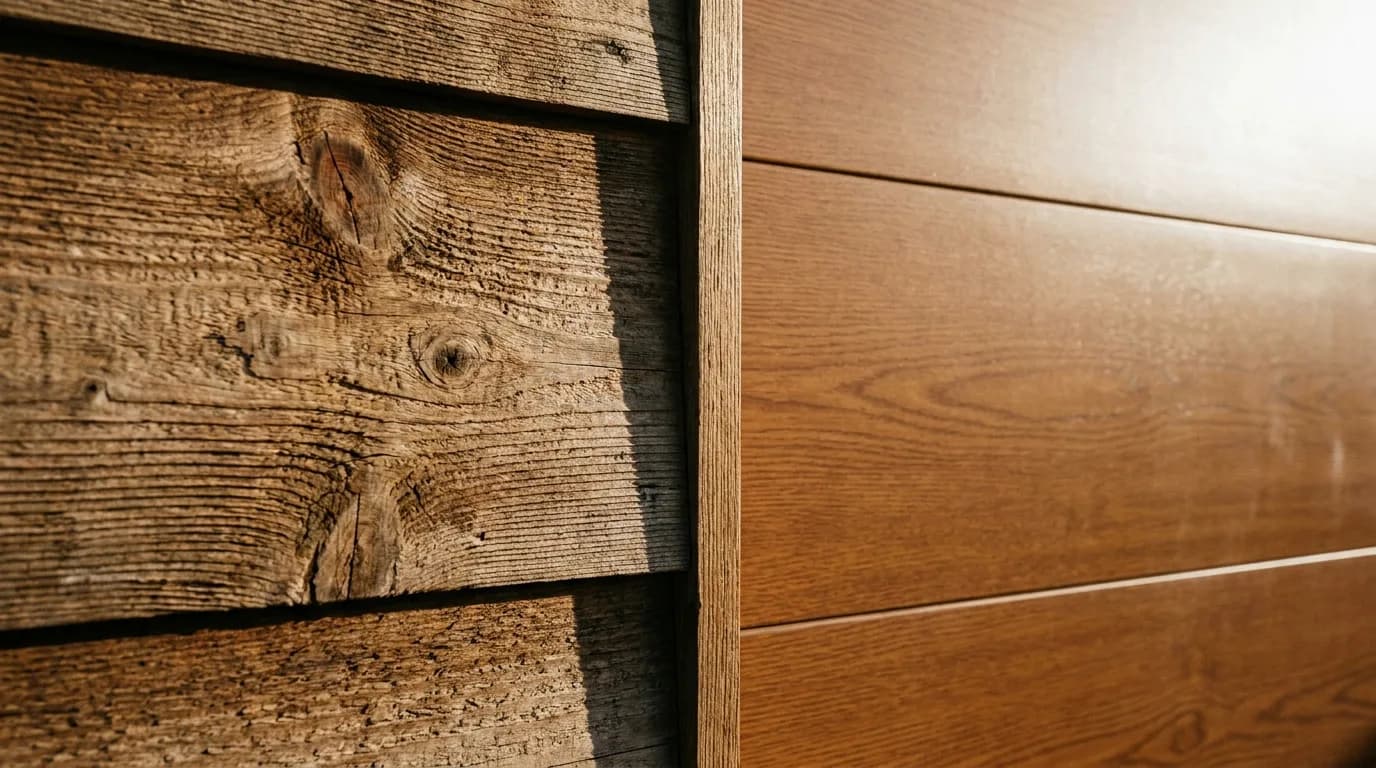
- Real timber, usually Western Red Cedar, gives a depth of grain nothing else matches. It needs re-finishing on a schedule rather than when it starts looking tired, and — this is the part rarely mentioned — its weight genuinely changes as it weathers and is re-coated, so the balance should be re-checked periodically rather than set once at installation.
- Timber-look aluminium and composite panels give most of the appearance with none of the re-finishing. They are also dimensionally stable, which matters on a wide door where a few millimetres of movement across the width shows.
- Framed and frameless aluminium composite reads as contemporary architecture rather than as a garage door, particularly frameless where the panel edge is flush. Frameless is less forgiving of an opening that is out of square, so the jamb condition matters more.
- Battens and louvres give shadow lines and, in the case of louvres, ventilation — worth considering where the garage is also a workshop. Both add weight over a flat panel.
- Acrylic, polycarbonate and glazed infills bring daylight into a garage that would otherwise be a dark box. They are heavy, and on a wide door that weight is concentrated in a way flat sheet is not.
The question to ask before you order, not after
If the house is in one of Perth's character or heritage areas — Fremantle, East Fremantle, Guildford, parts of Mount Lawley, Subiaco, Claremont and others — local planning can govern what a street-facing replacement door is permitted to look like. This is a question for your local council, and the sequence saves real money: confirm what is permitted, then measure, then order. A made-to-measure door that arrives and cannot be kept is an expensive lesson, and it is entirely avoidable with one phone call at the right point. There is more on this in our piece on replacing a garage door in a Perth character area.
Record the specification while you have it
The most common frustration on custom doors is not failure, it is matching. Manufacturers change ranges. A door older than roughly fifteen years may no longer have a matching section made, which turns a single damaged panel into a whole-door conversation. The fix costs nothing at the time: photograph the compliance plate, note the range, the profile and the colour code, and keep it with the house documents. Doing that at installation makes a future repair a phone call instead of an investigation — and it is why we record and hand over the specification on every custom door we install.
Where the coast changes the answer
For any address in the salt belt, hardware specification matters more than panel material. Salt attacks the spring ends, the fixings, the track fasteners and the inside face of a door long before the visible front face shows anything at all. On a Cottesloe, City Beach or Trigg frontage we treat coastal-grade fixings and coatings as the default rather than an upgrade, and we would rather explain why than quietly fit standard hardware that will not last. That story is worth reading in full in salt air and coastal garage doors.