Why Wide Garage Doors Keep Killing Motors
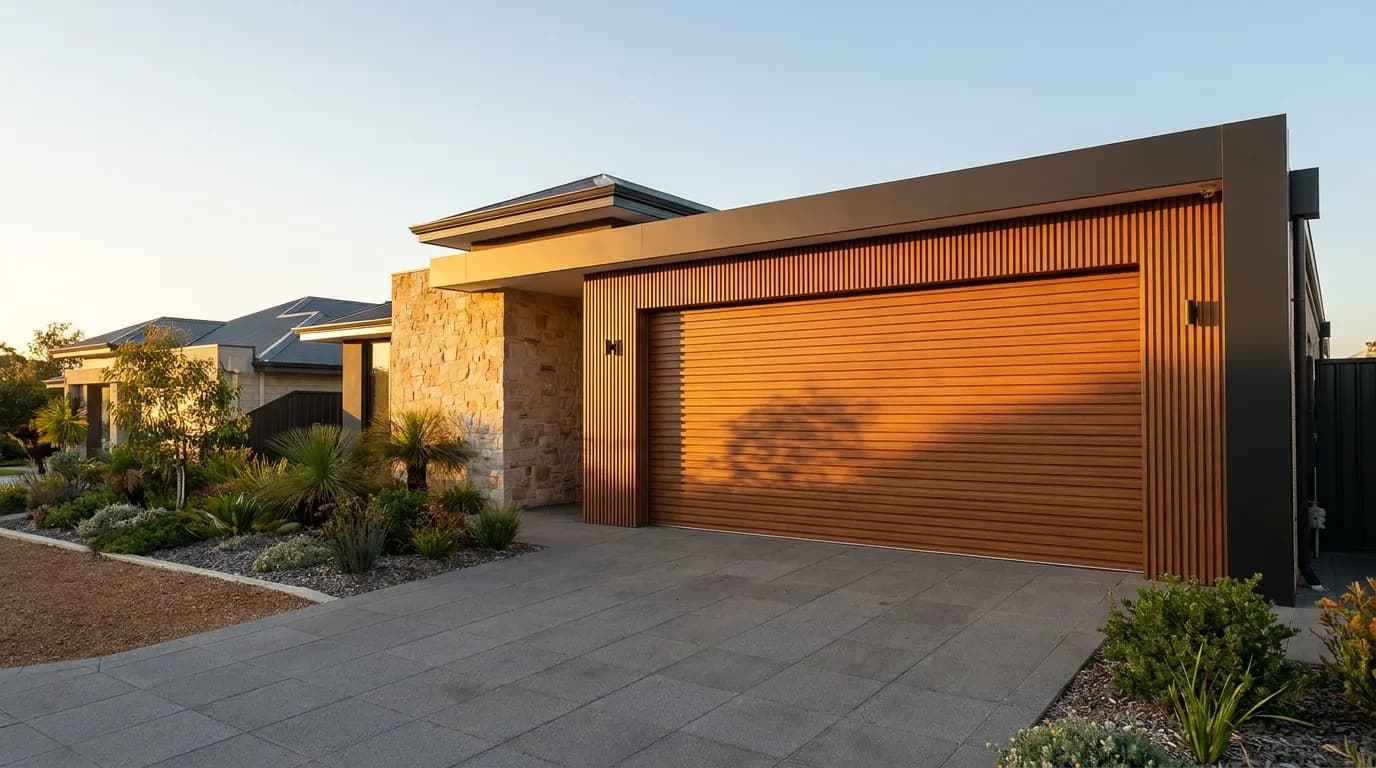
Here is a pattern we see often enough across Perth's riverside and western suburbs to call it predictable. A house is rebuilt or substantially renovated. A wide, clad, good-looking garage door goes in as part of the job. Somewhere between eighteen months and three years later the motor fails. It gets replaced under warranty or at the owner's cost. Then, roughly the same interval later, the replacement fails too.
At that point most people conclude they have been sold a bad motor twice. They have almost certainly been sold a correct motor twice, and the actual fault has never been touched.
What the springs are actually doing
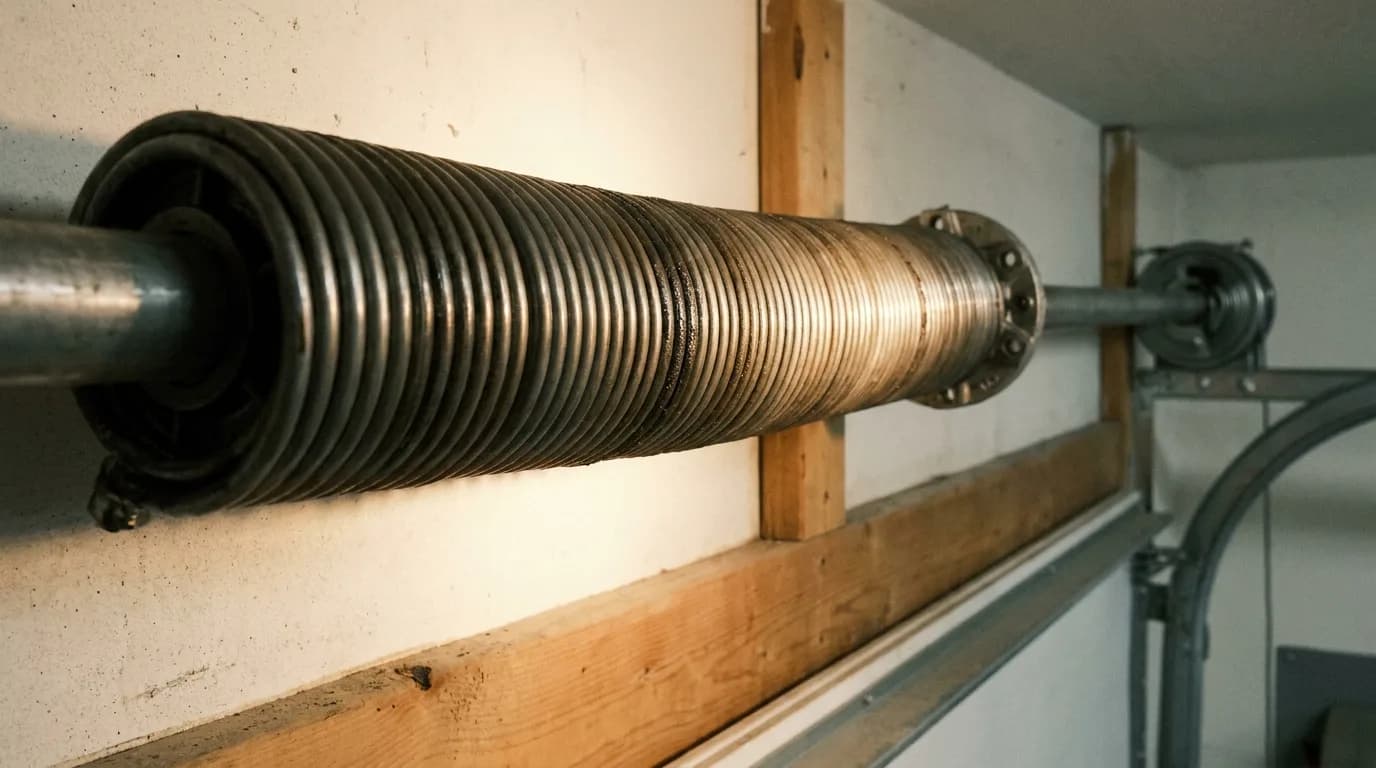
A garage door is heavy. A standard double is well over a hundred kilograms and a wide clad or insulated door can be considerably more. The motor is not what lifts that weight — it never was. The springs carry almost all of it, and the motor's job is to nudge an already-balanced door through its travel.
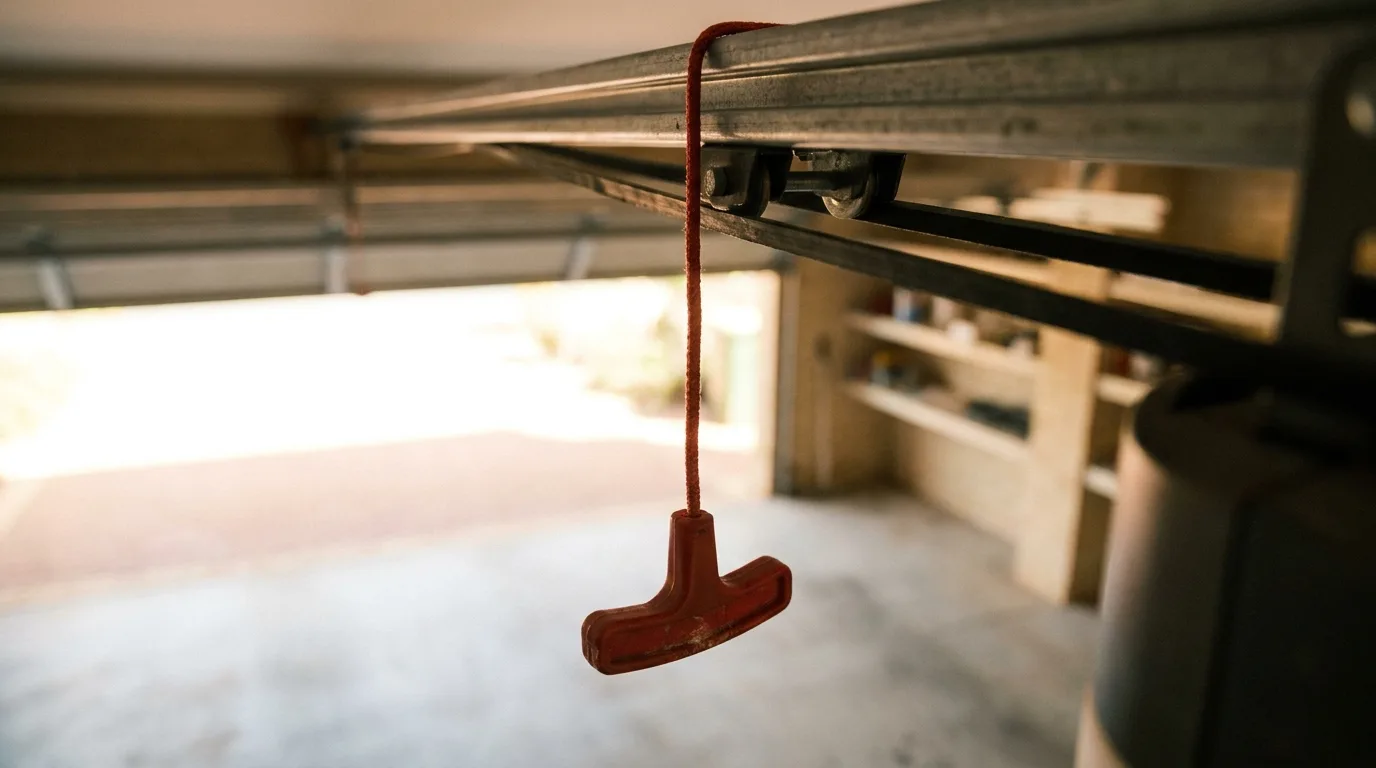
You can prove this on your own door in about a minute. Disconnect the motor at the manual release cord, then lift the door by hand. A correctly balanced door lifts with modest effort and stays roughly where you leave it anywhere in its travel. That is the springs doing their job. The full method is in the one-minute balance test, and it is the single most useful thing a homeowner can know how to do.
How the arithmetic goes wrong on a wide door
Spring specification is a calculation: the door's weight, the drum size, the drop, and the number of cycles the spring is expected to do. Get the weight input wrong and everything downstream is wrong with it.
On a standard door, weight is easy to assume because the range is narrow. On a custom door it is not. Cladding adds mass. Battens add mass. Glazing and acrylic infills add a lot of mass, and concentrate it. Insulation adds mass. Width multiplies whatever the panel weighs per square metre. A door that has been re-skinned or had a decorative treatment applied after installation weighs more than the door the springs were originally sized for — and nobody re-does the calculation, because from the outside nothing has changed.
The result is a door whose springs carry, say, eighty-five per cent of its weight instead of substantially all of it. Nothing looks wrong. The door opens and closes normally. But every single cycle, the motor is lifting the shortfall — and it will do that ten or fifteen times a day, every day, for as long as it lasts.
Why the motor takes the blame
Because it is the part that visibly stops working, and because the failure looks exactly like a motor failure. Drive gears wear out. The unit gets hot. The capacitor goes. Those are all real symptoms of a motor at the end of its life — they are just not evidence that the motor was the problem.
There is a second reason. Modern openers have a force setting: the threshold beyond which the motor decides it has hit an obstruction and stops. On a slightly unbalanced door, the motor draws more current than it should, and the tempting fix is to raise the force limit so the door stops complaining. That is not a repair. It removes the safety threshold that stands between the door and whatever is underneath it, and it lets the unit work even further outside its design load. If someone has wound your force settings up, that is a symptom worth investigating, not a solution.
How to tell whether this is your door
- The door is wider than a standard double, clad, glazed, insulated, or has had a decorative treatment applied.
- The motor has failed once already, well inside what you would expect from the unit.
- With the motor disconnected, the door is heavy to lift by hand, or drops when you let go of it partway.
- The motor sounds like it is working hard through the middle of its travel rather than gliding.
- Someone has previously adjusted the force settings upwards to stop the door reversing.
- The door was installed as part of a build or renovation package rather than specified separately.
Any two of those together are worth a look. The last one on its own is worth a look, because a door supplied as part of a build package is the scenario in which the weight calculation is most likely to have been skipped.
What the fix actually involves
Measuring the door's real weight, specifying a spring configuration to that weight and the cycle count the household actually puts through it, replacing the springs as a matched pair, re-balancing the door, and then resetting the motor's travel and force limits against the corrected balance. That last step matters: new springs behind a motor still configured for the old, wrong situation is a job half done.
It is not an exotic repair, and it is considerably cheaper than a third motor. It is what our spring repair and replacement service exists to do, and on premium doors it is usually the whole answer to a problem people have been treating as an electrical one for years. If you are still at the specification stage rather than the failure stage, what actually decides the outcome on a custom garage door covers how to avoid ending up here.
One thing to stop doing right now
If your door has become heavy or the motor is straining, do not keep cycling it in the hope it settles. An unbalanced door puts load into the cables, the drums and the track as well as the motor, and a cable that has been running under load it was not sized for is a cable that will eventually let go. Springs and cables are not owner-serviceable under any circumstances — the energy stored in a torsion spring is enough to cause serious injury, and the tooling and sequence exist for a reason.