The One-Minute Balance Test That Predicts Your Next Breakdown
Most garage door failures announce themselves months in advance and nobody hears it, because the signal is not a noise. It is weight — and weight is invisible as long as a motor is doing the lifting for you.
The balance test removes the motor from the equation for sixty seconds and shows you what your door actually weighs. It needs no tools, no ladder and no expertise, and it is the check we would most like every Perth homeowner to know.
Why balance is the whole story
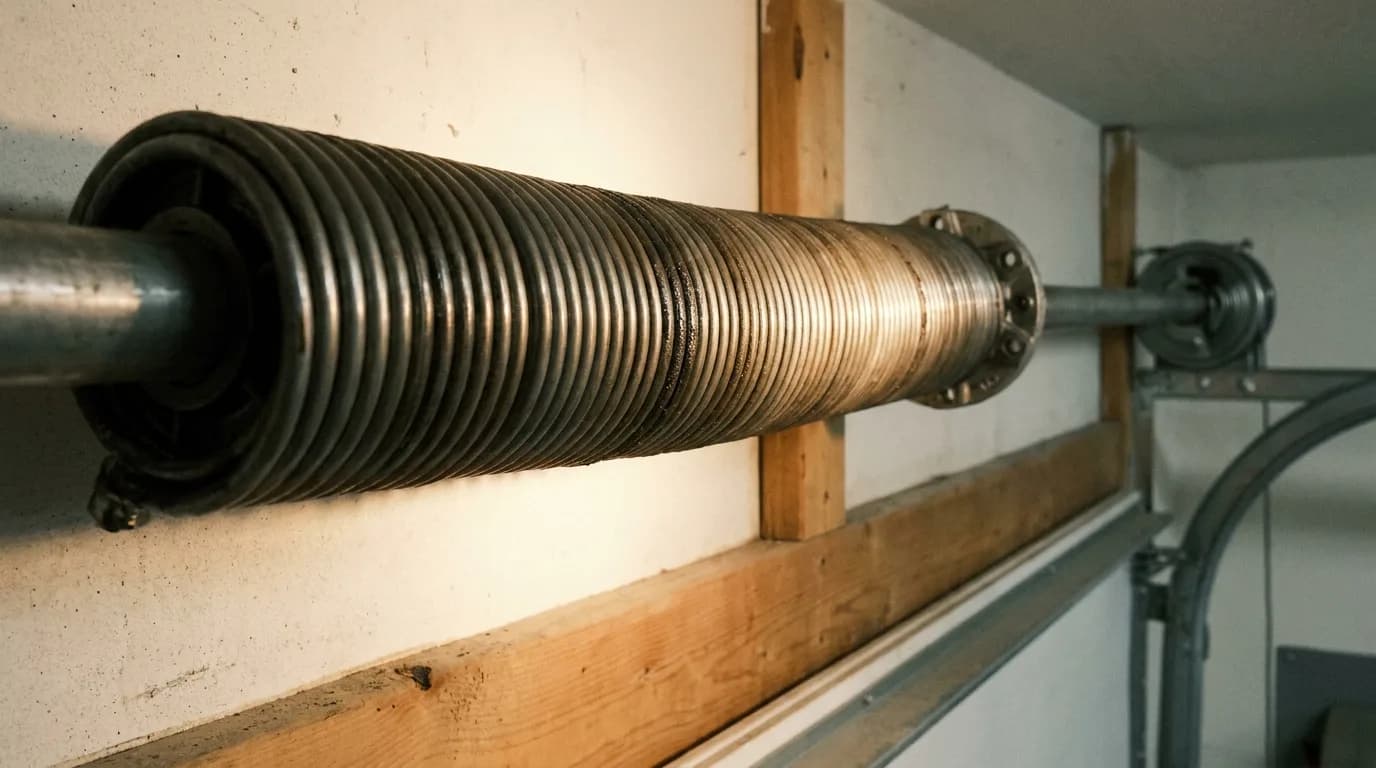
A garage door is counterbalanced by springs. On a correctly balanced door the springs carry very nearly all of its weight, and the motor's job is only to nudge that balanced door through its travel. The motor is not a lifting machine, and it was never designed to be one.
Springs are rated in cycles and fatigue steadily. As they lose tension, the weight they stop carrying does not vanish — it transfers to the motor, which absorbs it silently on every cycle. The door keeps working. Nothing sounds obviously wrong. And the motor now runs outside its design load until it fails, at which point everyone blames the motor. That sequence is covered in more depth in why wide garage doors keep killing motors.
How to run the test
Do this with the door fully closed, and with nobody and nothing underneath it.
- Close the door completely using the remote or wall button.
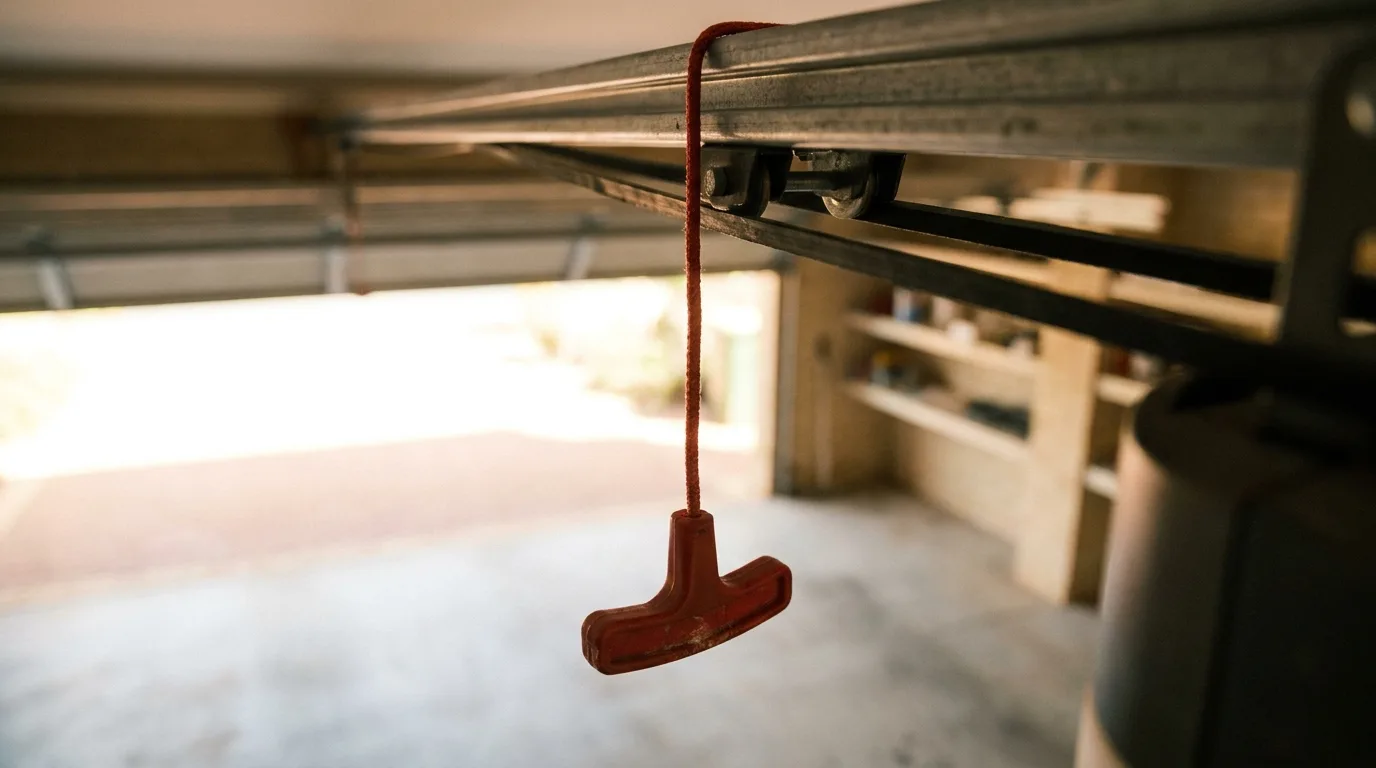
- Find the manual release — on almost every automatic door it is a cord with a handle, usually red, hanging from the trolley on the opener rail. Pull it. This disconnects the motor from the door.
- Lift the door by hand, slowly, using both hands and a straight back. It should feel manageable — genuinely liftable by one reasonably fit adult.
- Stop with the door about halfway open and let go, keeping your hands close.
- Watch what it does.
Reading the result
It stays put
The door holds roughly where you left it, drifting only slightly. This is a correctly balanced door and healthy springs. Lower it, re-engage the motor, and carry on with your day.
It sinks or drops
The springs have lost tension and the door is now carrying more of its own weight than it should. This is the finding that matters, because it is the state that precedes both a broken spring and a failed motor — and it is far cheaper to address now than after either of those. It is not an emergency. It is a booking.
It flies upward
Over-tensioned springs. Less common, and it causes its own problems: the door slams open, the motor fights it on the way down, and the top of the travel takes a beating. It also wants adjusting rather than ignoring.
You cannot lift it at all
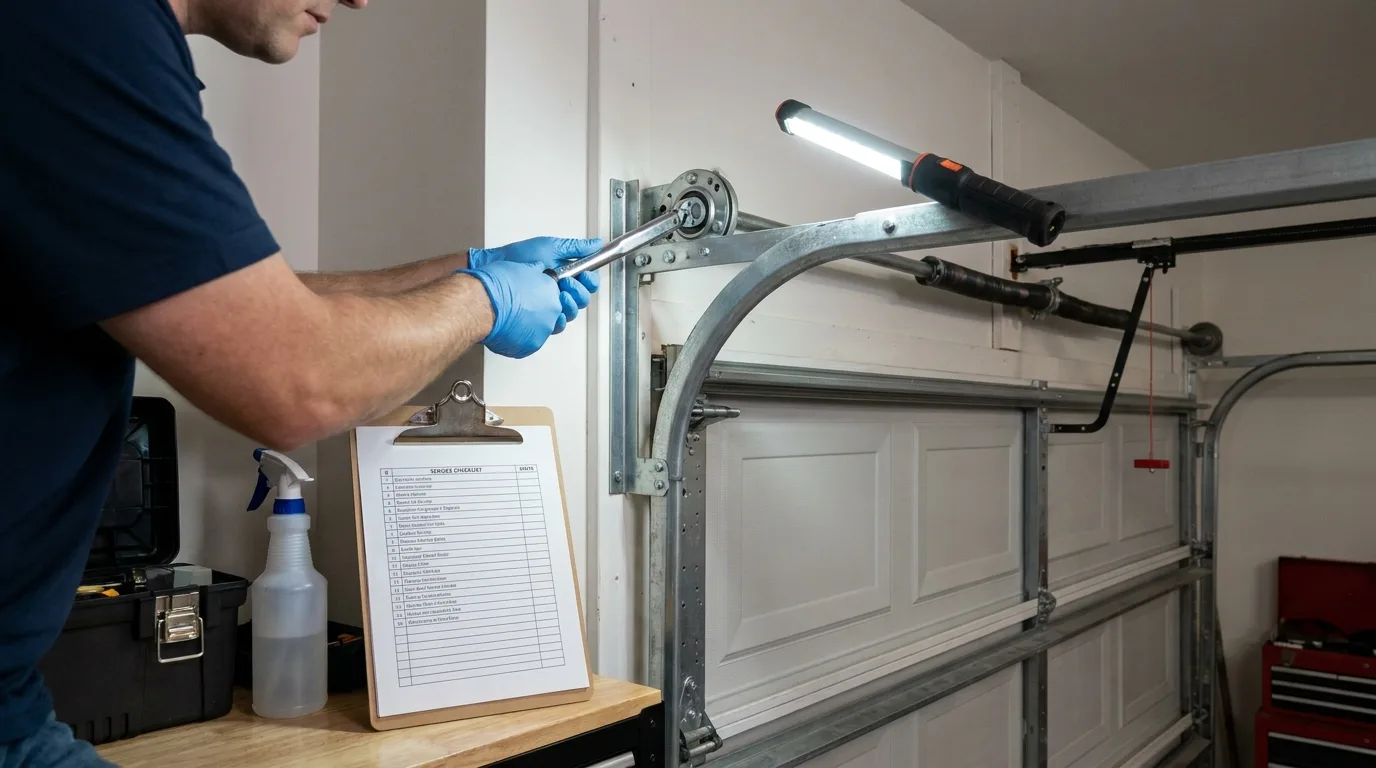
Stop. A door that is a dead weight by hand has lost its counterbalance entirely, which almost always means a broken spring or a failed cable. Do not force it, do not stand under it, and do not re-engage the motor and keep using it — running an opener against a door with no counterbalance damages the opener, the cables and the track, and can pull the door out of its guides. This is a call-out, and it is what our spring repair and replacement service exists for.
Re-engaging the motor afterwards
On most units you simply lower the door fully and then run the opener, and the trolley re-latches to the door as it travels. On some you pull the release cord back towards the door or the motor to re-engage manually. Either way, watch the first full cycle after re-engaging to be sure it has caught properly.
While you are there, it is worth knowing the manual release exists for a second reason: it is how you open your door in a blackout. That matters more in some parts of Perth than others, and it matters a great deal on the Darling Scarp, where storm outages last longest. We cover that in garage doors in the Perth Hills.
How often to run it
Twice a year is plenty for most households, and it fits naturally alongside checking the bottom seal and wiping the safety sensor lenses. On a coastal address, or on a door doing high cycles, run it more often — a fatiguing spring in the salt belt can move from fine to failed faster than the calendar suggests, and the same reasoning drives the intervals in how often a Perth garage door should be serviced.
The one thing this test does not tell you
It tells you the door's balance is wrong. It does not tell you why. A door can sit heavy because the springs have fatigued, because they were undersized from the start, because the door has gained weight from cladding or insulation, or because something is binding in the tracks and adding drag. Those have different fixes, and distinguishing between them is the diagnostic part of a garage door repair visit. What the test gives you is the reason to make the call while it is still cheap.