Garage Doors in the Perth Hills: Gradient, Litter and Blackouts
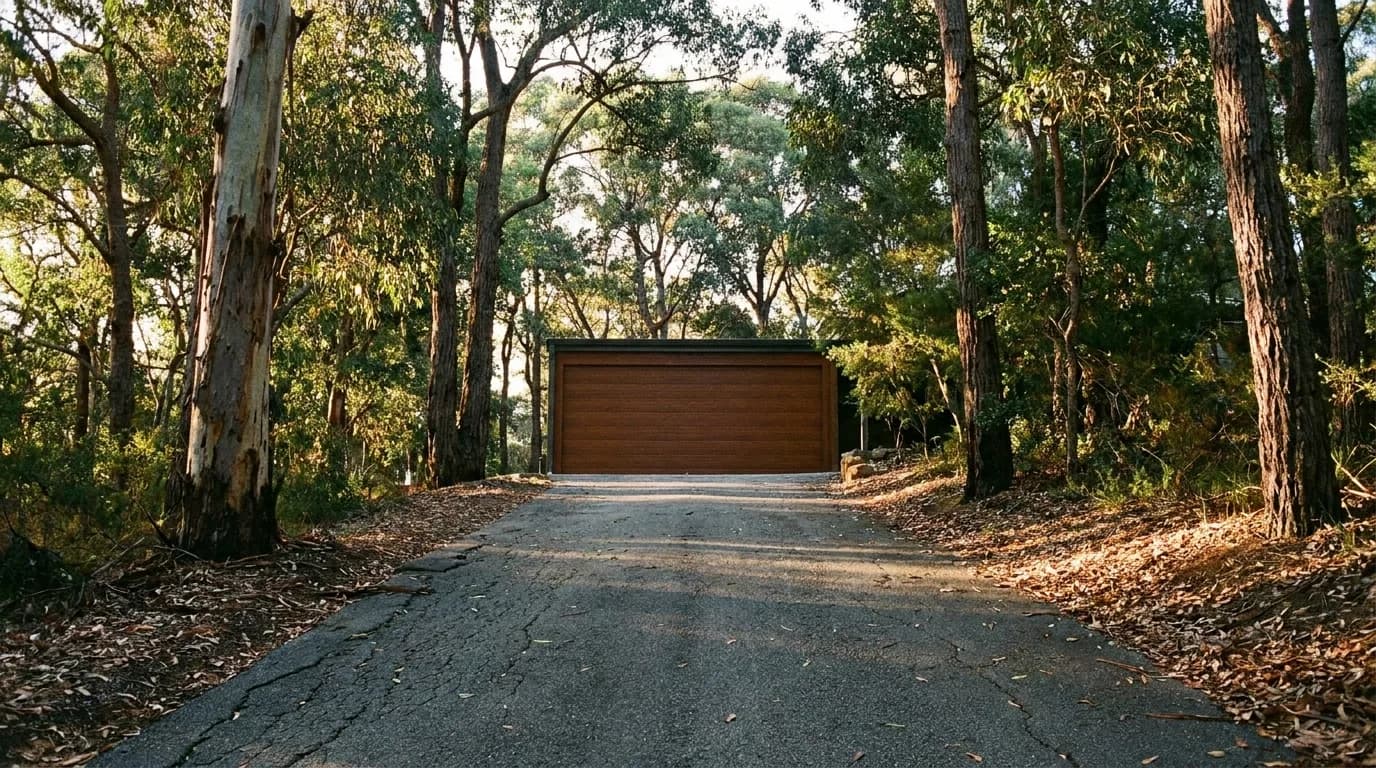
The Darling Scarp starts about twenty-five kilometres east of the Perth CBD and changes almost everything about how a garage door lives. Kalamunda, Lesmurdie, Gooseberry Hill, Darlington, Glen Forrest, Mundaring, Roleystone, Parkerville, Walliston, Bickley, Carmel — these are bush blocks with long approaches, and a door up here is doing a materially different job from the identical door in Innaloo.
Three factors account for nearly all of it.
1. Gradient: the door and the floor are not parallel
Hills driveways climb or fall to meet the garage, often steeply. A garage door closes onto a threshold that is level, but it arrives at a driveway that is not — and where the two meet, the geometry does not work the way the door was designed for.
What owners notice is a draught, insects getting in, leaf litter blowing under one corner, or water tracking in during a winter storm. What is actually happening is that the bottom seal compresses hard at one corner and stands proud at the other, so it wears unevenly and never seals across its full width. People live with this for years assuming it is just what a garage on a slope does.
It is usually fixable without replacing the door. A threshold seal matched to the actual gap, or a bottom seal profile suited to an uneven meeting line, solves most of it. The second gradient effect is less visible: on a slope the motor's travel limits drift out of true more readily, because the point at which the door meets resistance is not where the motor was told the floor would be. Resetting the limits against the actual floor fixes a surprising number of hills complaints that get diagnosed as motor faults.
2. Litter: jarrah and marri never stop
Bush blocks drop continuously, and the volume genuinely surprises people who move up from the plain. All of it finds its way into the tracks, the side guides and the bottom channel, where it does exactly what sand does on the coast — adds drag, grinds on every cycle, and eventually spikes the force the motor reads as an obstruction.
This is why so many hills doors reverse partway through closing for no visible reason. The motor is correctly detecting an obstruction; the obstruction is a season's worth of leaf fall. It is the cheapest fault there is and it gets misdiagnosed as a dying opener constantly — the same story told in Perth sand and garage door tracks, with different material.
On an exposed escarpment-edge property like Gooseberry Hill, the wind coming up the scarp face carries litter directly at the house rather than dropping it under the trees, which makes it worse rather than better. Clearing the channels is the single most useful maintenance habit up here.
3. Power: the manual release stops being trivia
This is the one we most want hills households to read. The scarp loses power in storms more often than the coastal plain, and gets it back later. That turns a piece of hardware most people have never noticed into a genuine safety item.
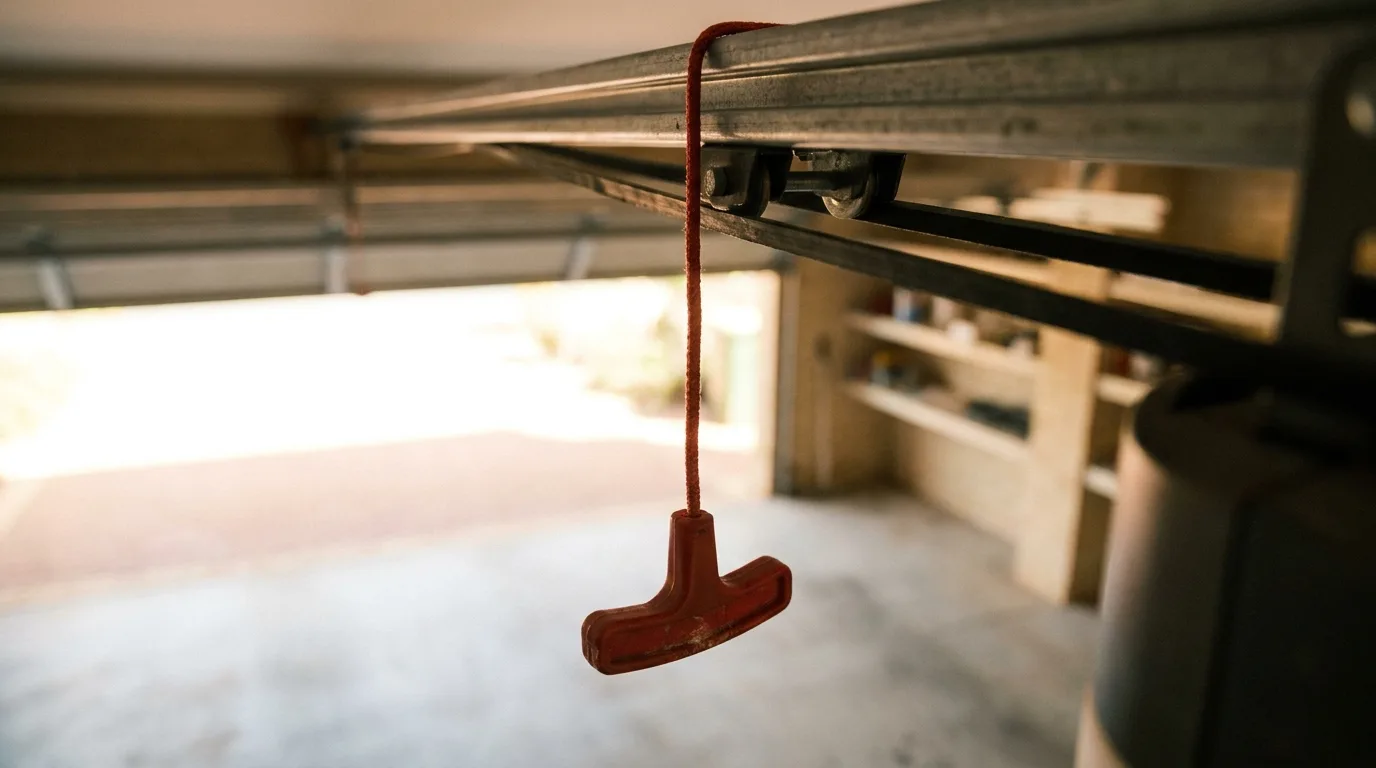
Every automatic garage door has a manual release — almost always a cord with a handle, usually red, hanging from the trolley on the opener rail. Pulling it disconnects the motor so the door can be lifted by hand. In a blackout it is the difference between getting your car out and not.
Two things worth doing before you need it. First, find yours now and make sure everyone in the household knows where it is and what it does. Second, try it — with the door fully closed and nobody underneath. If the door lifts by hand with reasonable effort, you are fine. If it is a dead weight, do not force it: that means the counterbalance has failed, and it is a call-out rather than a blackout problem. The full method is in the one-minute balance test.
Battery backup is worth genuinely considering up here rather than treating as an accessory. On a property where outages are measured in hours rather than minutes, and where the driveway is long and the nearest alternative is far, it earns its place. We fit it as part of motor and opener work.
Two more hills realities
Timber doors and changing weight
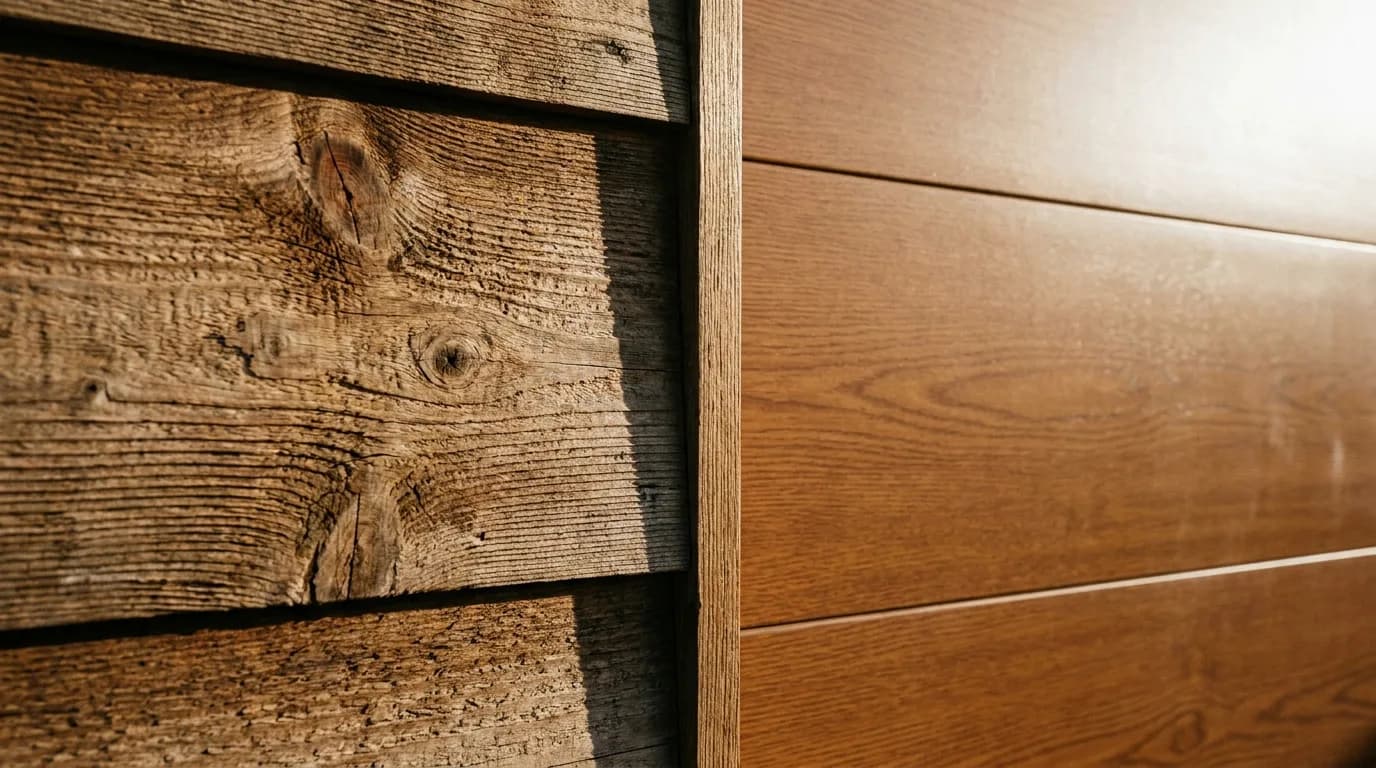
Real timber and timber-clad doors are popular up here for good reason — they belong in a bush setting in a way a powder-coated panel does not quite manage. The mechanical catch is that a timber door's weight changes over its life as it weathers and is re-coated, so the balance set at installation is not permanently correct. Have it re-checked periodically rather than assumed. More on the trade-offs in real cedar or timber-look.
The second door nobody thinks about
Hills and semi-rural properties frequently have more than one door — the house garage plus a shed, workshop or machinery bay somewhere on the block. The second one is almost always the neglected one: older, larger, often manual, and the one that fails at the worst moment because nothing has ever been done to it. Because a call-out this far up the scarp costs the same whether we look at one door or three, it is worth mentioning everything on the property when you book.
One thing we will not tell you
Parts of the Perth Hills are designated bushfire prone areas, and that can affect material choices on a replacement door. We will raise it as a question, and we will point you at the current DFES Map of Bush Fire Prone Areas and your local council for the answer. What we will not do is assert a bushfire attack level for your address — that is a certified assessment, not a tradesman's opinion, and a wrong one is worse than none.