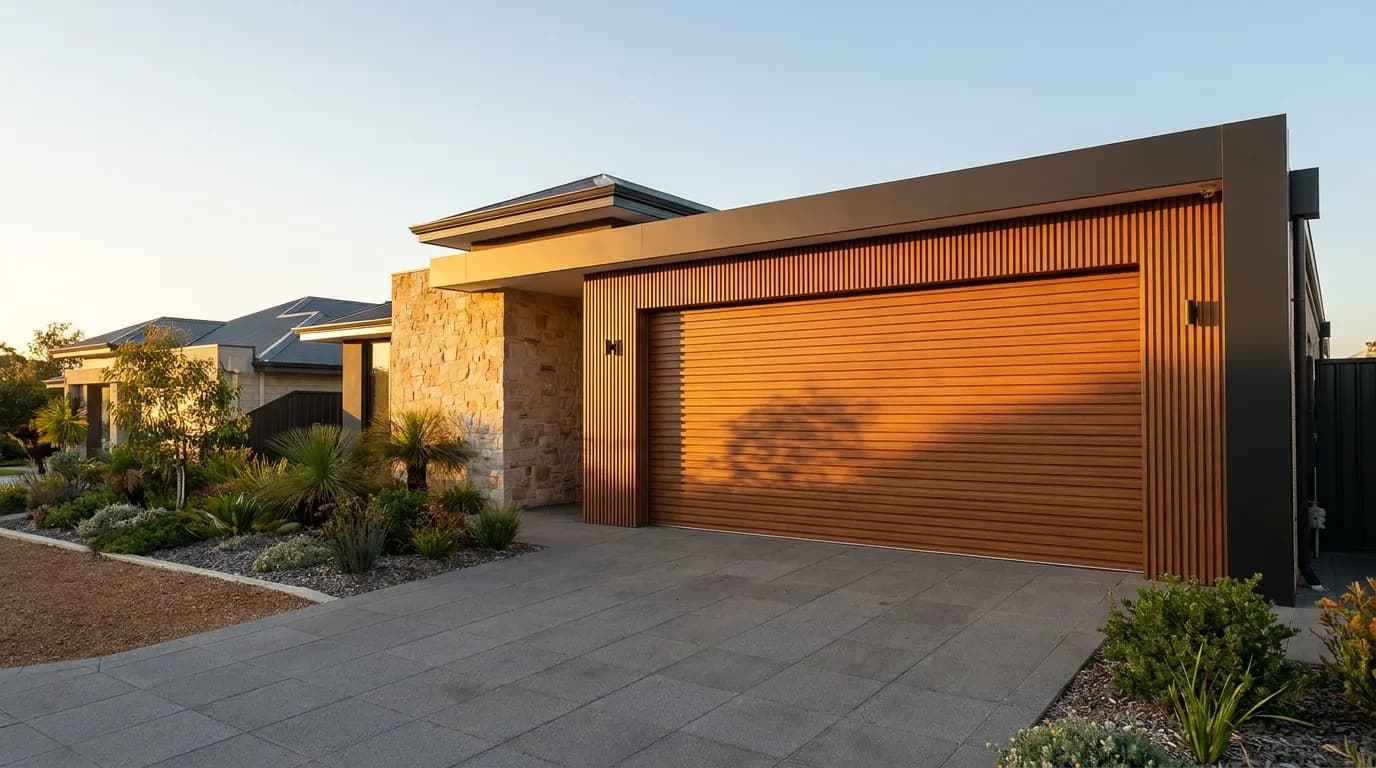
Is an Insulated Garage Door Worth It in Perth?
Insulated garage doors are marketed hard in Perth, and one of the market's better-known competitors leads their entire homepage with the summer-heat argument. The pitch is not wrong. It is just answered far too often with a blanket yes, when the honest answer depends almost entirely on one question: what is your garage actually for?
The question that decides it
If your garage is a place where a car sits overnight and you walk through it to the house, an insulated door will make a measurable difference to the temperature in there and very little difference to your life. The car does not care, and you are in the space for ninety seconds a day.
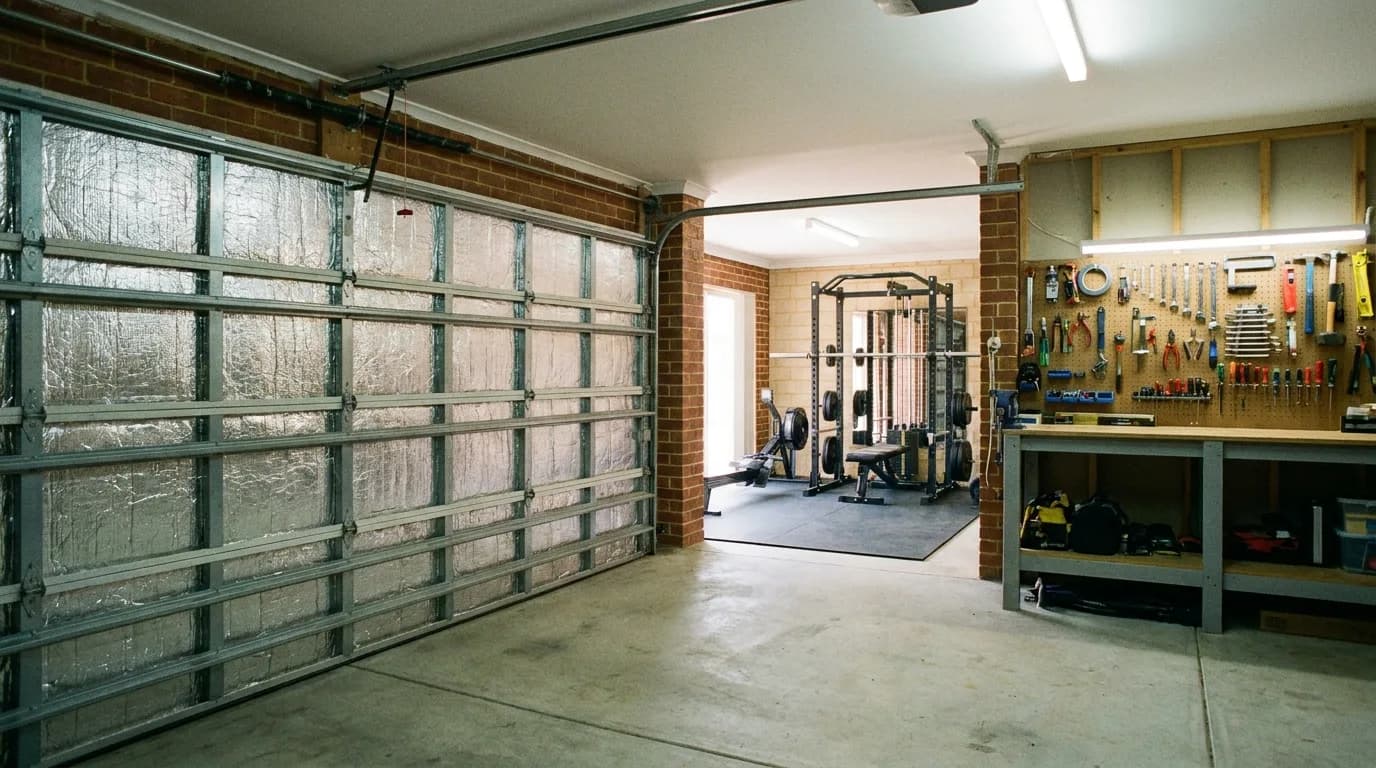
If your garage is a workshop, a gym, a home office, a studio, a second living space, or a room the house opens directly into — which describes a very large share of Perth garages, particularly in the bigger-block suburbs — then the calculation changes completely. You are now heating and cooling a room whose largest single surface is an uninsulated sheet of steel facing the weather.
Why the aspect matters as much as the door
Perth summers run long stretches in the high thirties and beyond, and a west-facing garage door takes the full force of the afternoon on the hottest part of the day. A north-facing door takes sustained sun through the middle of it. A south-facing door in a shaded street is a fundamentally different proposition, and putting an insulated door on it will produce a much smaller change.
So before spending on insulation, work out which way your door faces and when the room is actually used. A garage gym used at six in the morning on an east-facing wall has a very different problem from a workshop used at four in the afternoon on a west-facing one — and only one of those is primarily a door problem.
What insulation does not fix
This is where the marketing tends to overreach. An insulated door slows heat transfer through the door. It does not seal the room. If your garage has gaps around the perimeter of the door, an unsealed side door, roof ventilation straight into an uninsulated roof space, or a bottom seal that has perished into a five-millimetre gap along its full width, air will move regardless of what the panel is made of.
In practice, on a lot of the garages we look at, the cheapest meaningful improvement is not an insulated door at all — it is a properly fitted bottom seal and perimeter weather seals on the existing door. That is a fraction of the cost and it addresses the air movement rather than the conduction. If you then still want the panel upgrade, you will get more out of it, because the two work together.
The mechanical consequence nobody mentions at the counter
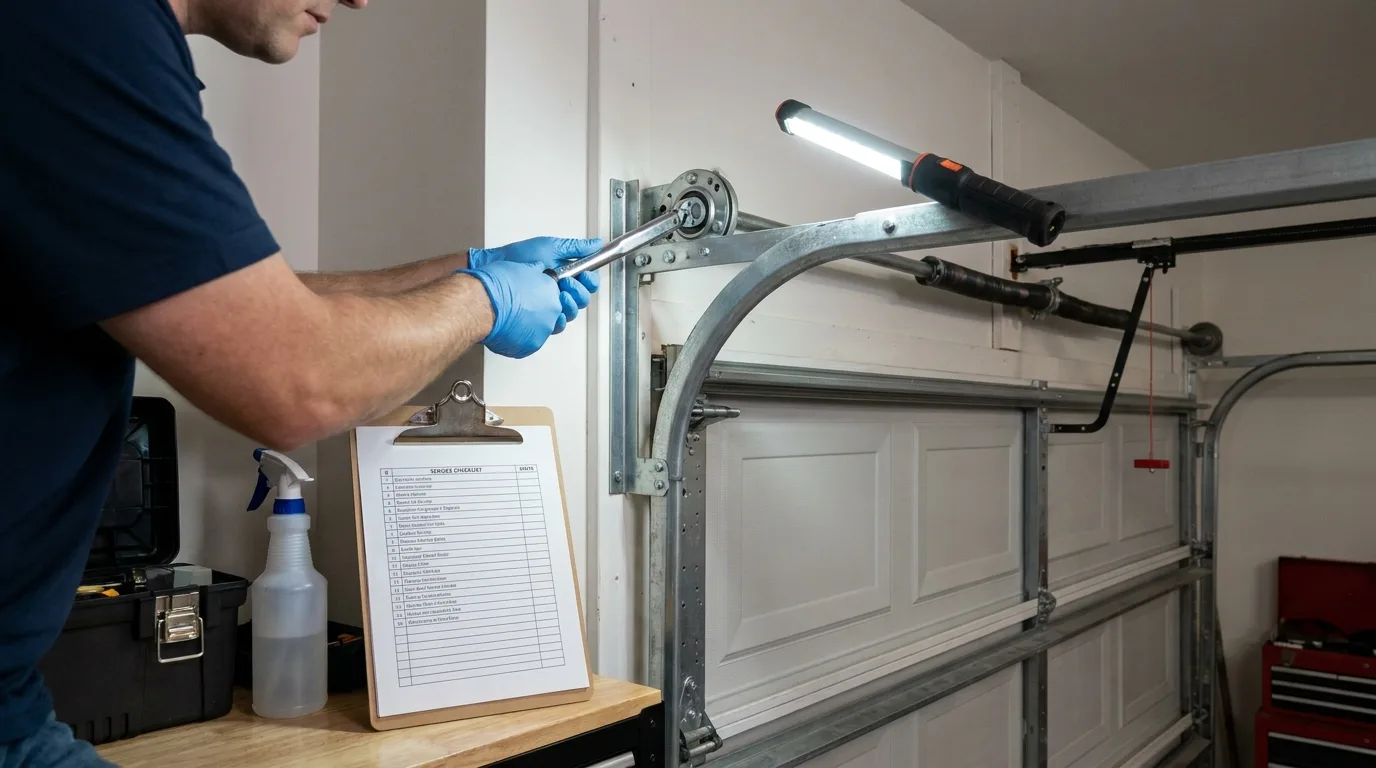
Insulated panels are heavier than non-insulated ones. On a double door that difference is real, and on a wide door it is significant. That has one non-negotiable implication: the spring system has to be sized to the insulated door's weight, not to the weight of the door it replaced.
Where this goes wrong most often is a retrofit — an existing door replaced with an insulated one, using the existing spring set because it is already there and it fits the shaft. The door will work. The motor will then spend its life lifting the difference, and it will fail early. We cover why that happens in detail in why wide garage doors keep killing motors, and it applies equally to any door that has gained weight.
If you are having insulation added to an existing door rather than replacing it — which is possible with some kits — the same rule applies, and it applies more sharply, because in that case nothing about the installation prompts anyone to re-check the springs.
The noise argument, which is usually undersold
Insulated doors are noticeably quieter, and in a suburb where a garage gets opened at five in the morning for a shift or a school run, that can matter more than the temperature. The insulation damps panel resonance, so the door does not boom the way a hollow steel panel does. Nobody leads with this and it is frequently the benefit people notice most after the fact.
The short version
- Car parking only, sheltered aspect: probably not worth it.
- Room in genuine use, west or north-facing: yes, materially.
- Fix the seals first either way — air movement beats conduction on most Perth garages.
- Insist the springs are sized to the insulated door's weight, especially on a retrofit.
- Expect a quieter door as well as a cooler one; it is often the bigger day-to-day difference.
We will give you this same assessment at the property rather than a blanket recommendation — including telling you when insulation is not the right spend. That is part of how we approach garage door installation and replacement, and it is a better conversation to have before ordering than after.